

Family Immigration to Canada A Complete Guide by Suma Law
Family is at the heart of life in Canada. The country’s immigration policies reflect this value by providing multiple pathways for families to reunite, build a future together, and thrive in one of the world’s most welcoming nations.
At Suma Law, we understand that immigration is more than paperwork it’s about bringing loved ones together. This guide will walk you through everything you need to know about family immigration to Canada, from eligibility and application processes to the benefits and challenges of starting your new life here.
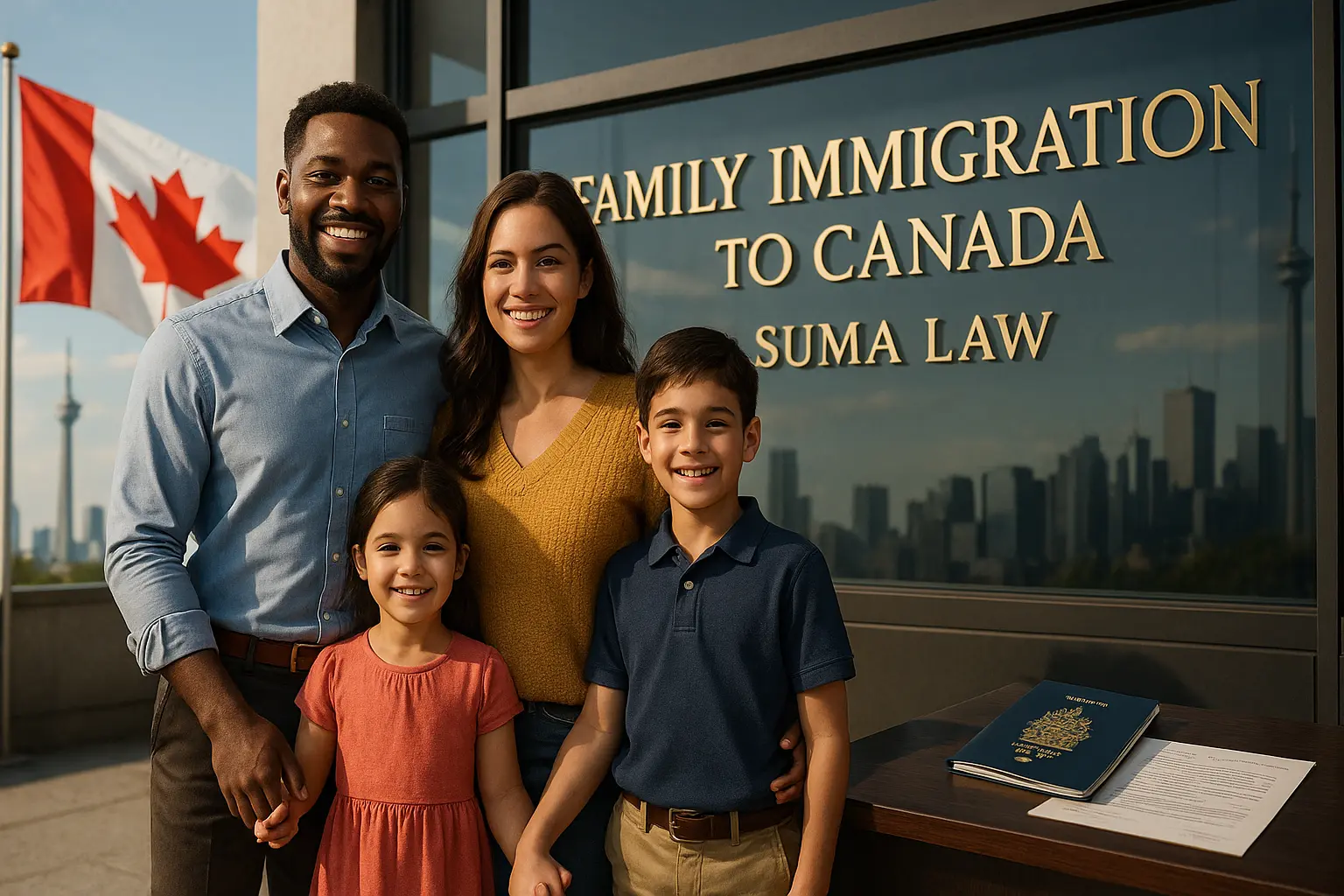
Why Choose Canada for Family Immigration?
Canada consistently top countries for quality of life, economic stability, and cultural diversity. Its family reunification program is one of the most generous in the world, reflecting the government’s commitment to keeping families together.
Key benefits include:
- World-class education for children
- Universal healthcare access
- Safe, inclusive communities
- Strong economic opportunities for all skill levels
- Permanent residency with a pathway to citizenship
Canada’s multicultural fabric ensures that newcomers feel welcomed while maintaining their cultural heritage.
Understanding Family Immigration to Canada
Family immigration refers to programs that allow Canadian citizens and permanent residents to sponsor their family members to come to Canada as permanent residents.
This falls under Family Class Sponsorship, managed by Immigration, Refugees and Citizenship Canada (IRCC). The primary goal is simple: to reunite families.
Who Can You Sponsor Under Family Immigration?
Under Canada’s Family Class Sponsorship Program, you may be eligible to sponsor:
- Spouse or Common-Law Partner – Whether married or in a committed partnership.
- Dependent Children – Biological or adopted, under 22 years old and unmarried.
- Parents and Grandparents – Through the Parents and Grandparents Program (PGP).
- Other Relatives – In certain situations, such as orphaned siblings, nieces, nephews, or grandchildren under 18.
Main Categories of Family Immigration to Canada
1. Spousal and Common-Law Partner Sponsorship
If you are married or in a committed relationship, you can sponsor your partner to join you in Canada.
There are two main types:
- Inland Sponsorship – For couples already living together in Canada.
- Outland Sponsorship – For couples where the sponsored partner is outside Canada.
Processing Time: Typically 12 months.
2. Dependent Child Sponsorship
Parents can sponsor biological or adopted children, provided they are:
- Under 22 years old
- Unmarried and without a common-law partner
- Dependent due to physical or mental conditions (no age limit in such cases)
3. Parents and Grandparents Sponsorship (PGP)
The PGP allows Canadian citizens and permanent residents to bring parents and grandparents to Canada as permanent residents.
This program has an annual intake cap and works through an interest-based sponsorship lottery system.
4. Super Visa for Parents and Grandparents
If you cannot sponsor parents or grandparents under the PGP, the Super Visa offers a long-term multiple-entry option, valid for up to 10 years, allowing stays of up to 5 years per visit.
Eligibility Requirements for Sponsors
To sponsor a family member, you must:
- Be 18 years or older
- Be a Canadian citizen, permanent resident, or registered under the Canadian Indian Act
- Prove the ability to financially support the sponsored person
- Not receiving social assistance (except for disability)
Some categories, such as parents and grandparents, require meeting Minimum Necessary Income (MNI) thresholds for the last three years.
Financial Requirements for Sponsorship
The financial requirement ensures sponsors can support their family members without relying on public assistance.
For example, sponsoring parents and grandparents require proof of income that meets the Low-Income Cut-Off (LICO) plus 30%. This amount varies based on family size and is updated annually by IRCC.
Step-by-Step Process for Family Immigration to Canada
Step 1 – Determine Eligibility
Check if both you and your family member meet the program’s requirements.
Step 2 – Prepare Documentation
Gather essential documents such as:
- Proof of relationship (marriage certificate, birth certificate, adoption papers)
- Identity documents (passports, IDs)
- Financial proof (tax returns, employment letters)
Step 3 – Submit Sponsorship Application
Apply online or by paper, depending on the program. Ensure you pay the processing fee and Right of Permanent Residence Fee (RPRF).
Step 4 – Application Processing
IRCC will review your application, request biometrics, and may require medical exams.
Step 5 – Decision and Arrival
Once approved, your family member will receive a Confirmation of Permanent Residence (COPR) and can travel to Canada.
Common Challenges in Family Immigration And How Suma Law Can Help
While Canada’s family immigration system is welcoming, it can be complex.
Challenges include:
- Meeting financial thresholds
- Proving the authenticity of relationships
- Navigating long processing times
- Understanding document requirements
At Suma Law, our immigration lawyers ensure your application is complete, accurate, and compelling, reducing the risk of delays or refusals.
Processing Times for Family Immigration Applications
Processing times vary based on the category:
- Spousal Sponsorship: ~12 months
- Dependent Child Sponsorship: ~10–12 months
- Parents/Grandparents Sponsorship: 24–36 months
- Super Visa: 3–6 months
IRCC updates processing times regularly, so staying informed is crucial.
Rights and Benefits for Sponsored Family Members
Once your sponsored family members become permanent residents, they enjoy:
- The right to live, work, and study anywhere in Canada
- Access to public healthcare and social benefits
- Protection under Canadian law and the Charter of Rights and Freedoms
- A pathway to Canadian citizenship after meeting residency requirements
Costs Associated with Family Immigration
Typical costs include:
- Sponsorship application fee: $75
- Principal applicant processing fee: $490
- Right of Permanent Residence Fee (RPRF): $515
- Biometrics fee: $85 per person
- Medical exams and police certificates (varies by country)
Tips for a Successful Family Immigration Application
- Provide Complete Documentation – Missing documents are a top reason for delays.
- Demonstrate Relationship Authenticity – Include photos, joint bank statements, travel history, etc.
- Meet Financial Requirements – Ensure tax records and employment proof align with IRCC standards.
- Seek Professional Guidance – Immigration law changes frequently; professional advice ensures compliance.
Why Choose Suma Law for Family Immigration to Canada?
At Suma Law, we specialise in family immigration cases with a success-approach.
We offer:
- Personalised consultation tailored to your case
- Complete application preparation and submission
- Regular updates throughout the process
- Representation in case of IRCC concerns or refusals
Our mission is simple to bring families together in Canada as quickly and smoothly as possible.
Conclusion Start Your Family Immigration Journey Today
Family immigration to Canada is a life-changing opportunity. Whether you’re reuniting with a spouse, bringing your children home, or welcoming your parents, Canada’s programs make it possible to build your future together.
With the right guidance, the process can be smooth, efficient, and stress-free. At Suma Law, we are here to guide you every step of the way — from eligibility checks to final approvals.
Contact Suma Law Today
Your family’s future in Canada starts with the right legal partner. Call us now for a free consultation and take the first step toward reuniting with you
Family Immigration to Canada, Family Immigration to Canada , Family Immigration to Canada , Family Immigration to Canada , Family Immigration to Canada , Family Immigration to Canada ,
